Dallas and Houston have seen increases in their population, demographics, and economy due to economic output.
UNDERSTANDING THE PASTS, ARMS US WITH THE KNOWLEDGE TO MAKE BETTER DECISIONS IN THE FUTURE
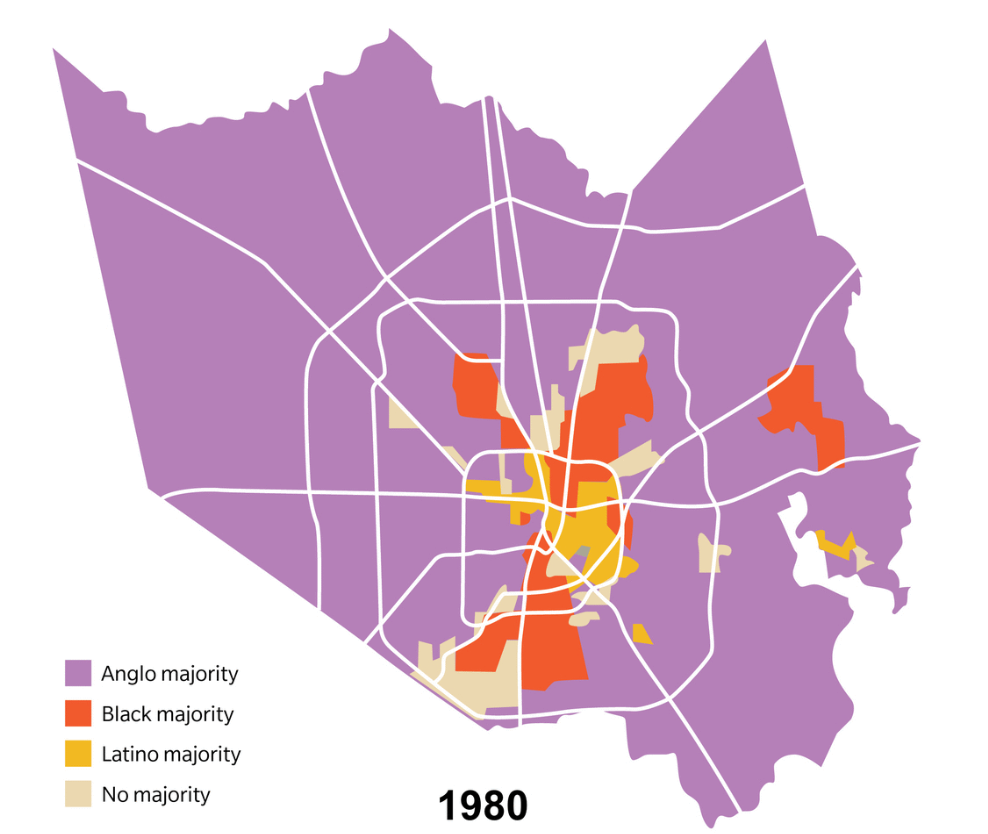
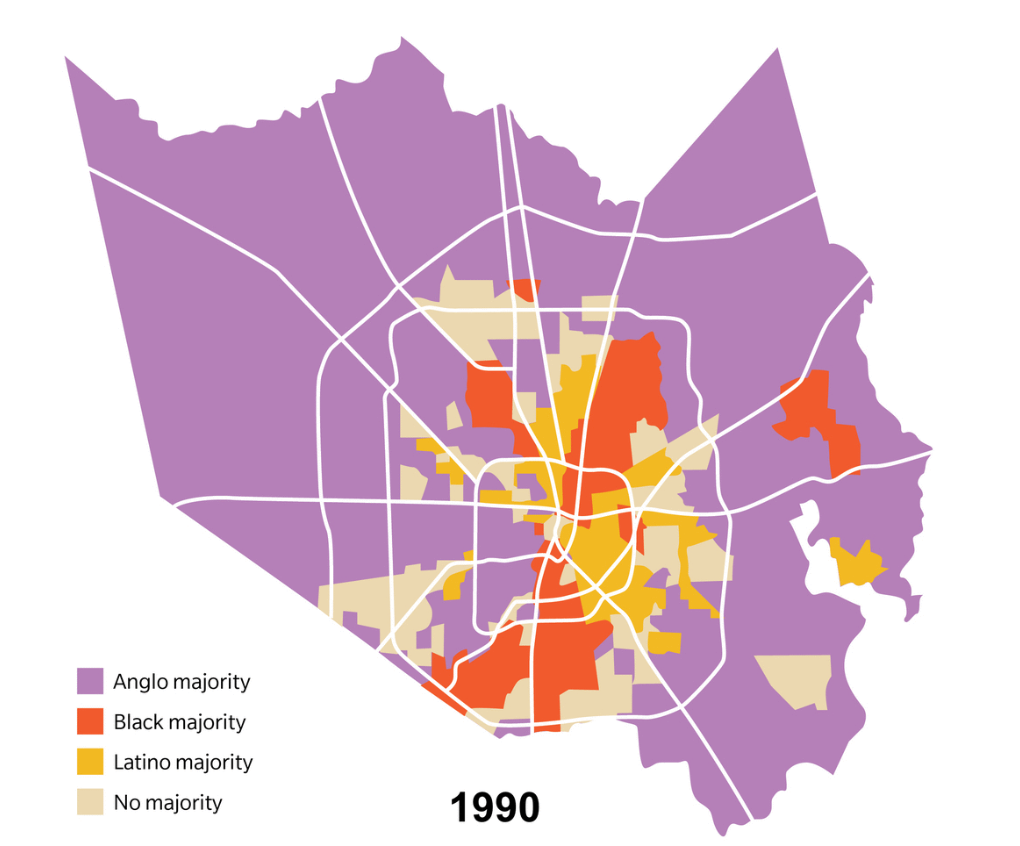
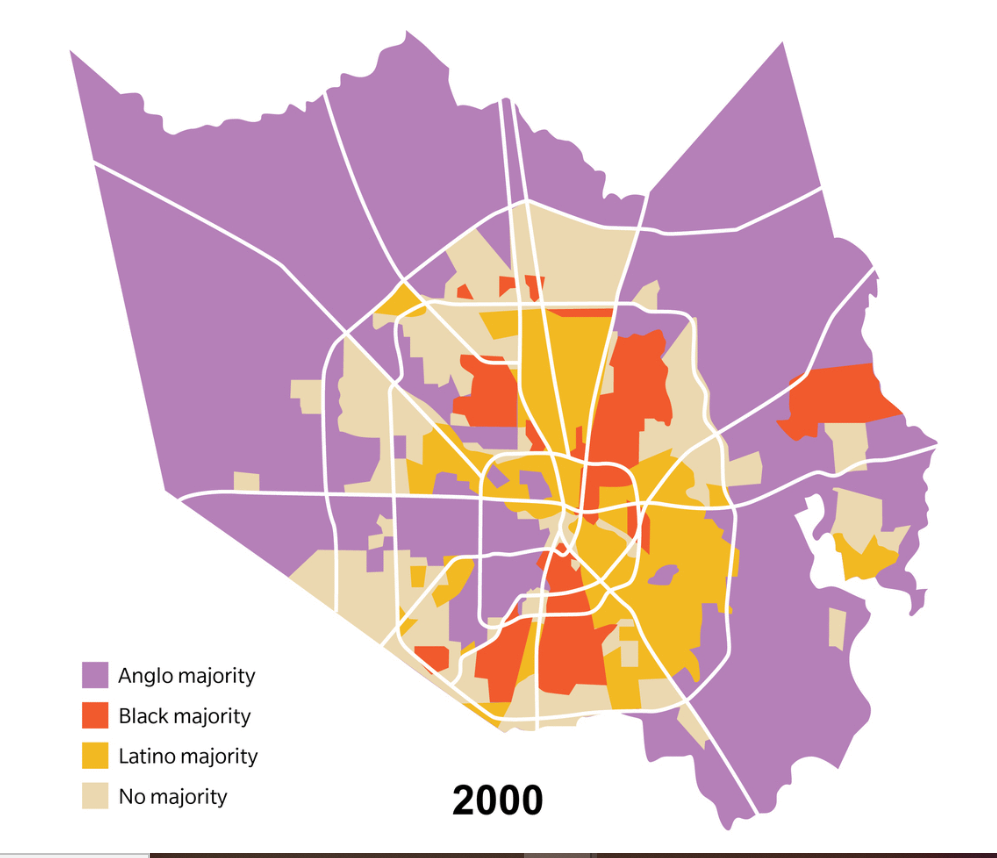
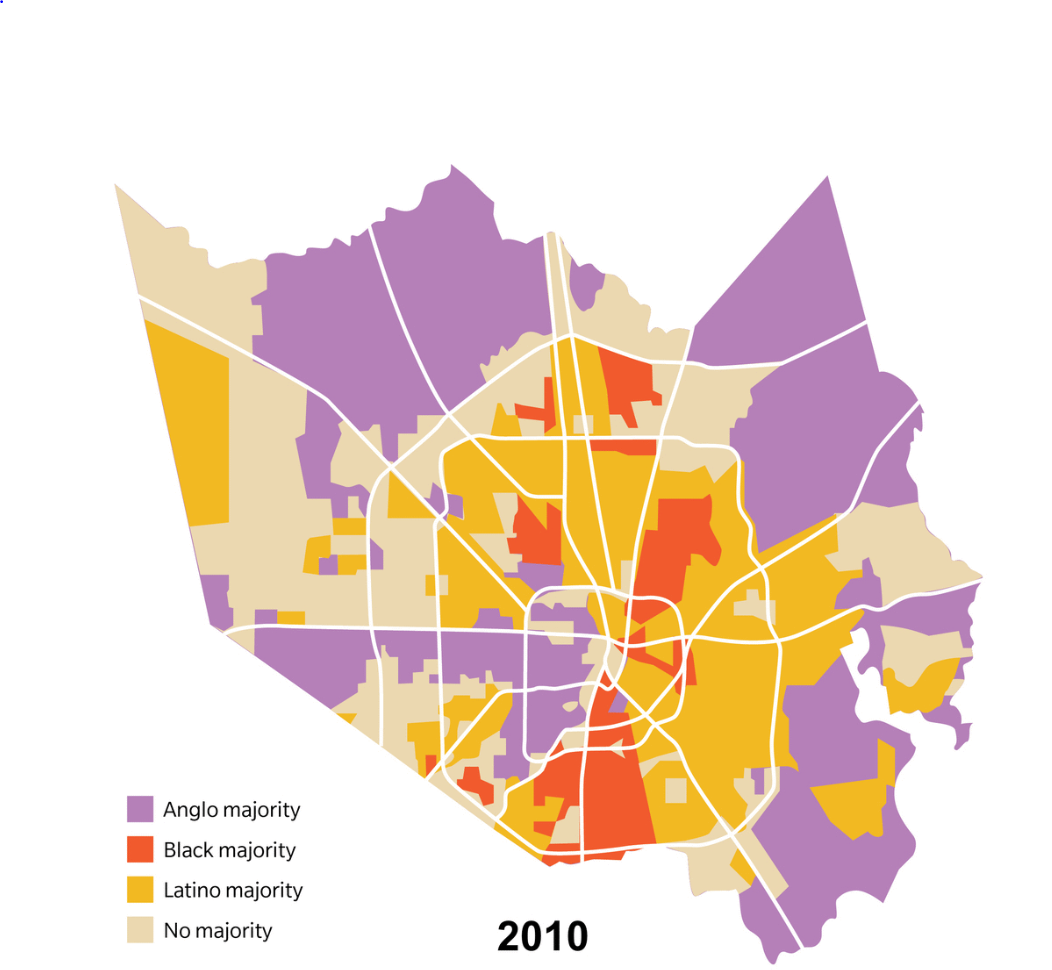
Houston’s (Harris County) Majority Demographic Since 1980
Source: Community Impact Maps
Harris county pretty much makes up all of Houston within the city limits. As you can see, Houston increased in population and diversity as time progressed. Maybe it was the bolstering economy? Maybe it was the prolific oil industry? Maybe it was the city’s progression towards more liberal ideals? Whatever the case is, Houston saw an increase in diversity, especially on the East side of Houston.
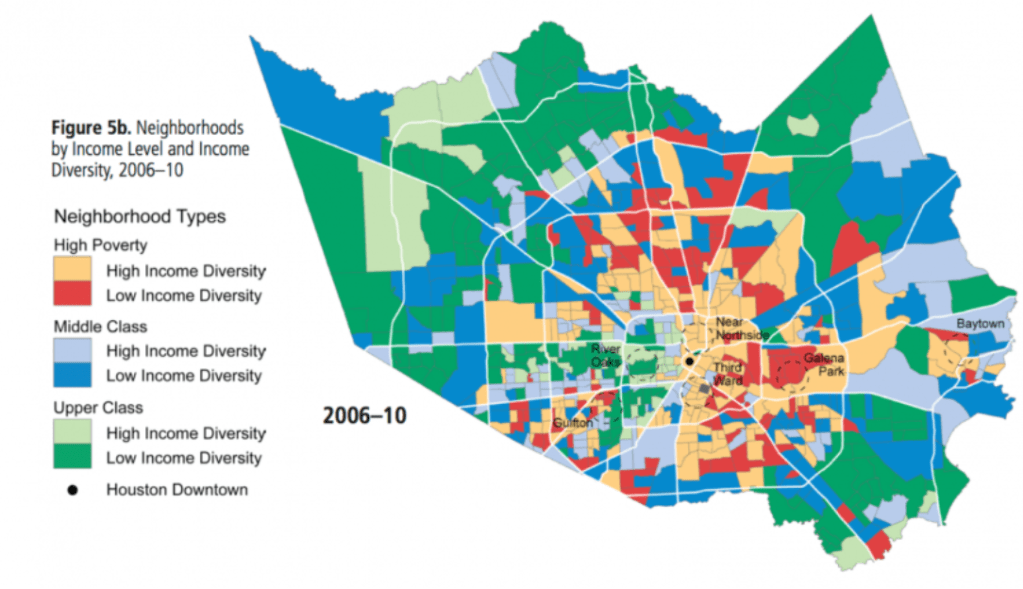
Neighborhoods by Income Level and Income Diversity 2006-2010
Source: Rice Institute for Urban Research
Similar to the diversity maps, you can see the Eastern region of Houston belongs to a low income demographic. This is the same region filled with people of color. Both maps reveal the the divides in Houston in regards to race and income. Before our eyes, we see this divide only worsening. As you continue exploring the website, you will see the same regions possessing larger populations of color and low income are more susceptible to environmental injustices.
GDP of the Greater Houston metro area from 2001 to 2017 (in billion U.S. dollars)
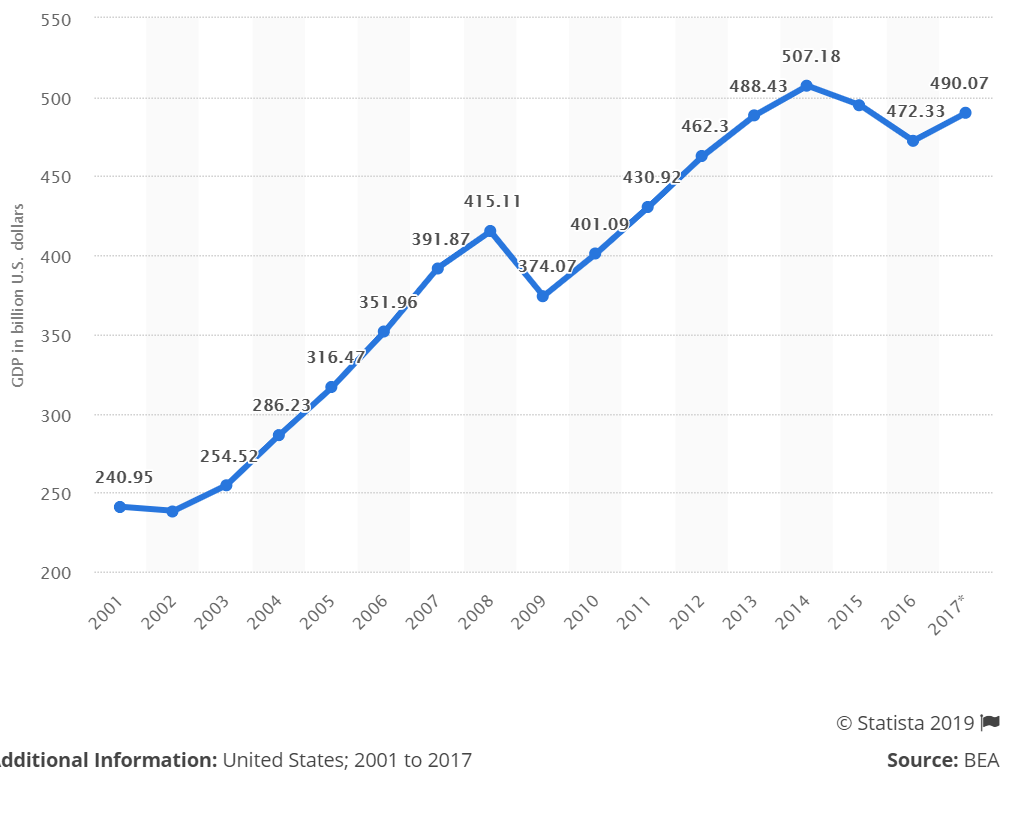
Houston has seen tremendous growth in its economy over the years. The economy of Houston is based essentially on the energy industry, particularly oil. However, health care, biomedical research, and aerospace are sectors that grow larger with each passing day.
Final Thoughts On Houston
Houston is more racially diverse than a lot of places. The current racial demographic is 58% White and about 23% Black. As time moves on, the Hispanic population is incessantly increasing. Houston’s economy does extremely well. So well, in fact if Houston was labeled as a country, it would be the 27th ranked country in regards to Gross Domestic Products Produced. With this being said, it is not exempt from racial and income division in regards to various communities. Instances of environmental injustice definitely occur in those same communities where the population of people of color is high and income is low.
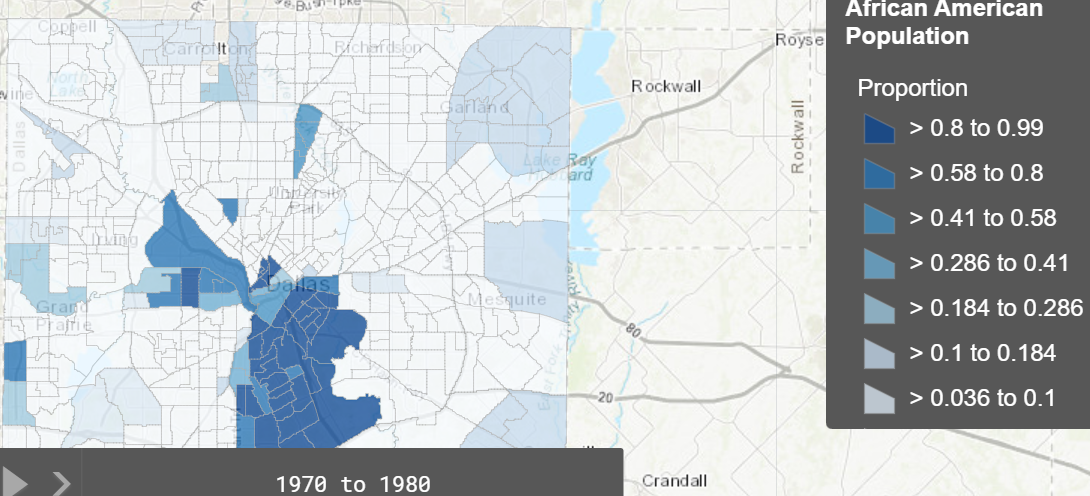
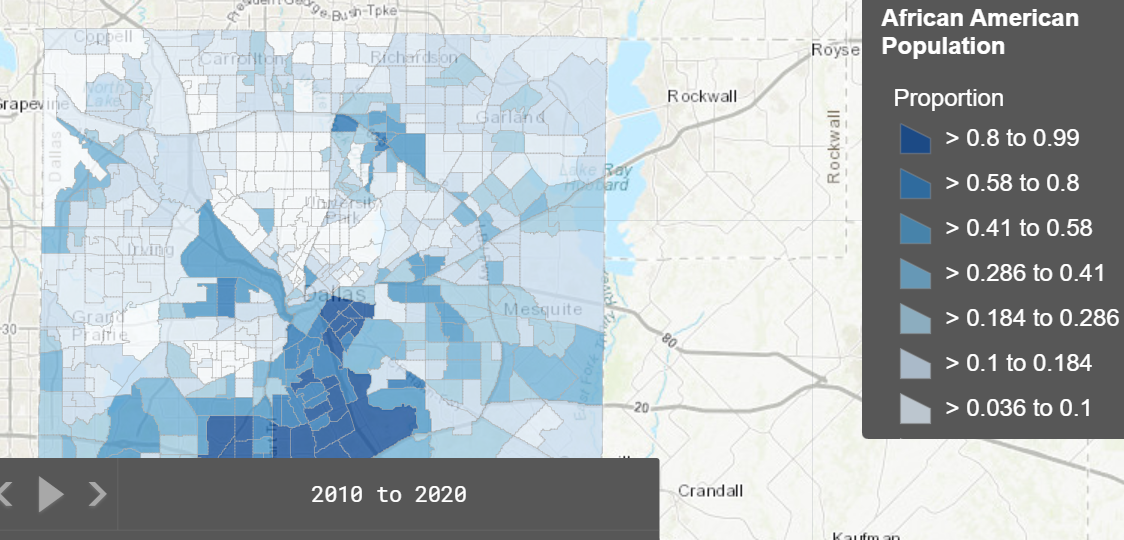
Dallas Population Percentage Change
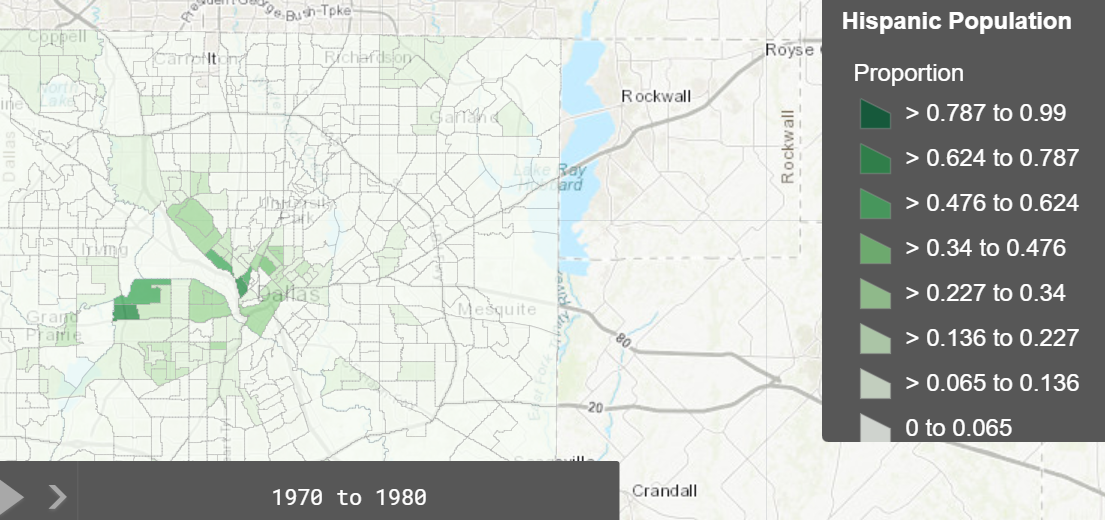
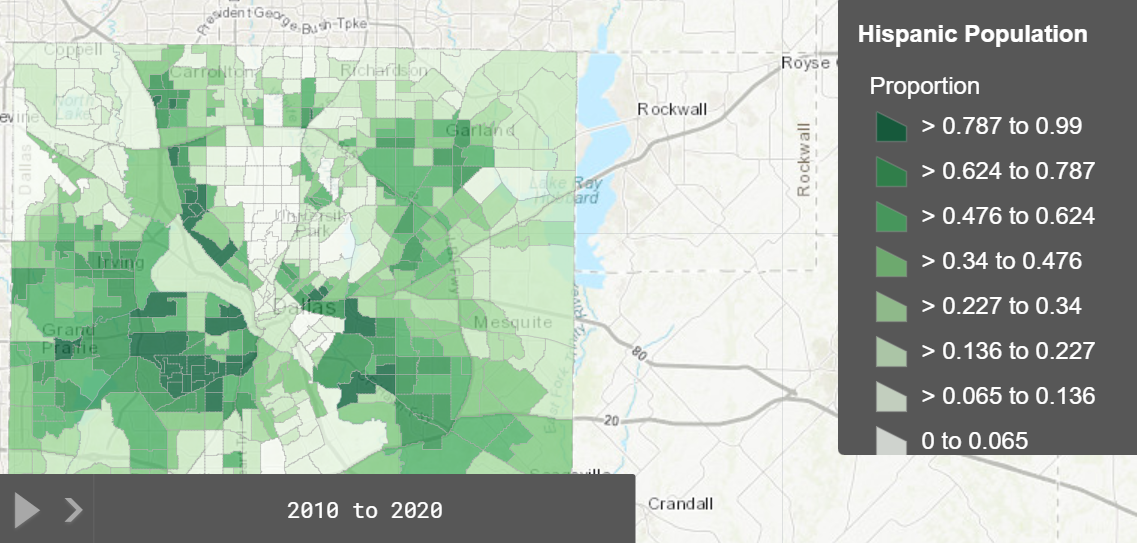
Source: Map Series
In the photos, you can see both the Hispanic and Black population increase over time. Though it is not a direct population growth graph but a population growth rate graph, you can tell that Dallas is definitely receiving an increase in diversity in their population. You can also see which communities in and around Dallas become diversified while other largely stay the same. Dallas deals with the same problem as Houston in regards to segregated communities. Different communities remain largely Black, while other communities remain largely White. The Hispanic population in Dallas is growing steadily and 62% of the population is White.
Dallas Household Income
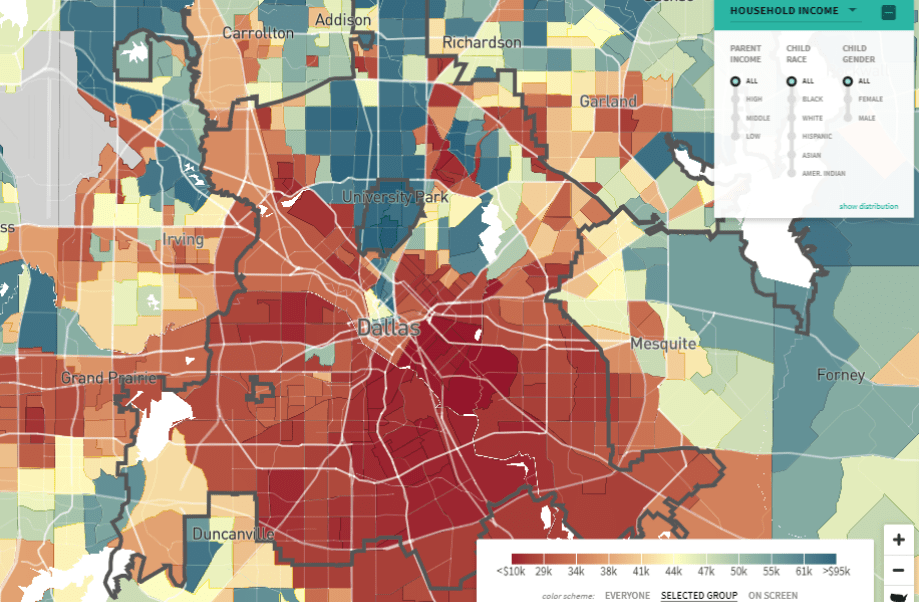
Source: Relocation
The Northern region of Dallas is financially the most wealthiest part of Dallas. Comparing it to the race maps, you can see that the demographics of the Northern region is mostly White. In this map, note that the Dallas economy is growing and expanding. This is similar to Houston as well. The economy of Dallas has definitely grown strong but it important to keep in mind that the wealth gap is growing too. Dallas has developed a strong industrial and financial sector, as well as becoming a major inland port, due largely to the presence of Dallas/Fort Worth International Airport, one of the largest and busiest airports in the world.
Final Thoughts on Dallas
Dallas proves to be more racially diverse than most places in Texas. The racial demographic is 62% White and about 24% Black. As time moves on, the Hispanic population has steadily increase. These demographics are extremely similar to Houston. It is important to note that in both places, the Hispanic population may be a bit larger. This is due to undocumented immigrants that may not show up in the Census. The economy of Dallas has seen growth in multiple sectors. For this reason, 24 Fortune 500 companies are headquarters in Dallas. Dallas is not exempt from racial and income division in regards to various communities. With all of this economic development, instances of environmental injustice definitely occur in places where there is (poor) people of color.
Comparison of Houston and Dallas (Focus Minute 4:14-6:45)
Food For Thought
Dallas and Houston possess multiple similarities but multiple differences. The economies generate a large amount of Gross Domestic Product while showing no signs of slowing down. The makeup of their economies begs one to pose questions. In regards to Houston: With the oil industry standing as a huge portion, how will the city move forward with this huge emphasis on finding different, more environmentally friendly energy sources? In regards to Dallas: with pending recession, how will the city deal with the decrease in business from their airports? Historically, Houston has depended on the energy sector primarily in their economy. Dallas has received support from a plethora of sectors. What does this mean for their legislation boards? One can assume that Houston is more susceptible to political corruption due to oil possessing such a stake in the economy.
Both places have also seen an increase in overall population. With the increase in overall population, there has been an increase in these communities of color. Both places are becoming more divers in regards to race but Dallas wealth gap is expanding at an alarming rate. Moving forward, how can Dallas best combat this? If the trend remains, environmental problems will only get worse because certain communities will have resources to combat unjust practices. As you explore more of the website, you will find toxic wast sites and unjust environmental practices are placed in these communities of color.
 Environmental Justice in Houston and Dallas